Exit Planning Software vs. Succession Planning Software: Which Do Advisors Actually Need?
For advisors working with privately held businesses, the conversation around exit planning and succession often gets blurred.
That is a problem, because while the two are related, they are not the same. A platform built only for internal succession may help map future leaders, but it may not help an advisor guide a business owner through a full exit strategy, personal goals, value growth, and execution.
That is the core of exit planning vs succession planning.
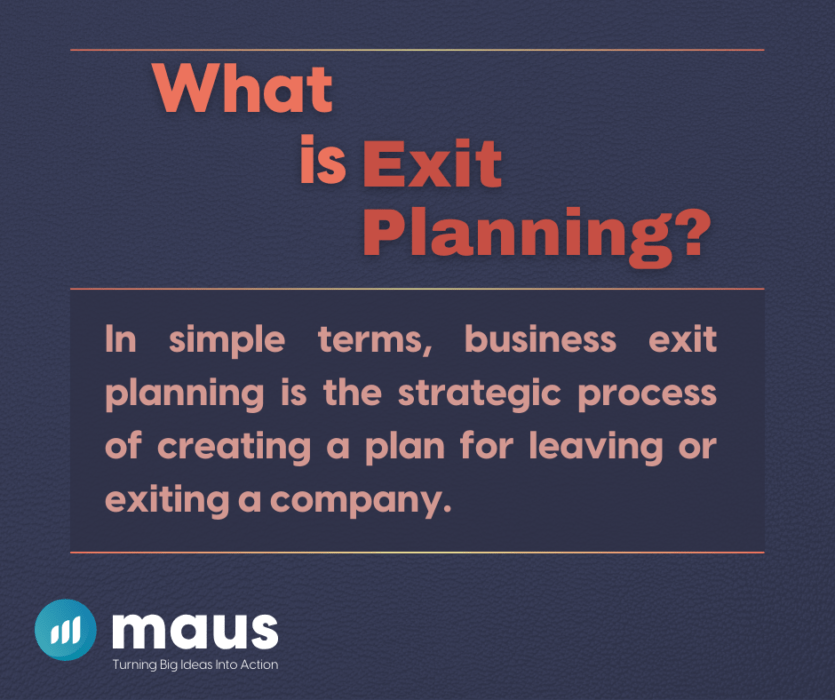
In simple terms, succession planning and exit planning overlap, but they solve different problems. Succession planning often centers on who will step into key leadership roles so the business continues. Exit planning looks at the broader transition: owner readiness, company value, timing, transfer options, and the owner’s personal financial future.
For advisors, that difference matters. If your work includes helping owners prepare for a successful exit, compare transfer paths, coordinate specialists, and ensure the business is more transferable, then you need more than a narrow continuity tool.
That is where a platform like Maus software for financial advisors fits. It supports the broader workflow behind real exit and succession plans, not just successor documentation.
What Is Exit Planning Software?
Exit planning software helps advisors guide business owners through the full transition process.
That means the software is built to support work such as:
- clarifying the owner’s goals
- assessing exit readiness
- improving transferable value
- evaluating multiple transfer options
- organizing action items across advisors
- aligning business goals with personal financial goals
This kind of planning focuses on the entire journey, not just the handoff of leadership. It helps answer questions like:
- What does the owner want from the next chapter?
- Is the company actually ready to transfer?
- What should improve before the owner exits?
- Which exit path best fits the owner’s goals?
- What needs to happen next to create a successful exit?
That is why exit planning software is a natural fit for advisors, consultants, and specialists such as a Certified Exit Planning Advisor (CEPA), a Certified Exit Planner (CExP), or a Certified Business Exit Consultant (CBEC).
Exit planning software is built for firms whose planning requires more than org charts, replacement planning, or a narrow internal handoff.
What Is Succession Planning Software?
Succession planning software is usually designed to help organizations prepare for continuity in key roles.
Its core use cases often include:
- identifying future leaders
- mapping internal successors
- preparing for changes in executive or management positions
- helping family members or employees step into key roles
- planning for continuity so the business continues
This category is valuable, especially when the business already knows it wants an internal successor and the main goal is to preserve operational continuity. In many organizations, succession planning software helps ensure the business can keep moving even when an owner, executive, or other leader steps away.
That said, succession planning is narrower. It often centers on internal bench strength and leadership roles, whereas exit planning software is broader and more strategic.
This is why best software for succession planning in 2026 is related to, but not identical with, exit planning software. Succession planning matters, but it is often just one component of broader exit and succession plans.
Exit Planning vs Succession Planning: What Is the Real Difference?
The clearest way to understand exit planning vs succession planning is this:
- Succession planning asks: who takes over, and how do we make sure the business continues?
- Exit planning asks: what does the owner want, what is the business worth, what path makes sense, and what must happen to create a successful exit?
That means exit planning and succession are connected, but they are not interchangeable.
A succession plan may focus on:
- internal successors
- family transitions
- continuity of operations
- next-generation readiness
- leadership development
An exit plan may focus on:
- the owner’s personal financial goals
- transferability and value growth
- third-party sale vs internal transfer
- family transfer vs outside buyer
- readiness, timing, and implementation
For advisors, this distinction is critical. If you are doing broader strategic work, then planning requires a platform that can handle much more than successor mapping.
Exit Planning Software vs. Succession Planning Software: Key Differences
| Category |
Exit Planning Software |
Succession Planning Software |
| Primary purpose |
Manage the full owner transition process |
Manage continuity in key leadership roles |
| Core question |
How does the owner achieve a successful exit? |
Who takes over so the business continues? |
| Scope |
Broad strategic process |
Narrower continuity process |
| Owner goals |
Central |
Often secondary |
| Personal financial planning |
Often included |
Usually outside the platform |
| Exit strategy support |
Strong |
Limited |
| Third-party sale readiness |
Often relevant |
Usually not a core function |
| Family members |
Considered as one transfer option |
Often a central focus |
| Leadership roles |
Part of the overall plan |
A primary focus |
| Value growth and transferability |
Core to the process |
Often absent |
| Advisor collaboration |
Important |
Less central |
| Exit and succession plans |
Both can be supported |
Usually succession only |
This is why many firms eventually realize they are not just doing succession planning. They are doing full exit planning.
If you are helping a business owner define goals, choose an exit strategy, improve value, and coordinate implementation, then you are in a broader category of work than most succession-only tools were built for.
That is much closer to the advisory process described in Exit Planning Process: 7 Stages Advisors Should Master.
When Succession Planning Software Is Enough
Succession planning software may be enough when:
- the business already knows it wants an internal successor
- the main concern is continuity in leadership roles
- the company wants to prepare employees or family members for transition
- the goal is to ensure the business keeps running smoothly
- there is little need to evaluate other exit paths
In these cases, succession planning and exit may overlap, but succession remains the main concern.
For example, if a family business already knows ownership will stay inside the family, the primary work may be helping family members move into leadership and ownership positions in a way that protects operations and relationships.
When Advisors Need Exit Planning Software Instead
Advisors usually need exit planning software when:
- the owner has not decided on a transfer path
- personal and personal financial goals are central
- business value needs improvement
- there may be a third-party sale
- multiple advisors must work together
- succession is only one part of the overall plan
- the firm wants a repeatable process that leads to a successful exit
This is where exit planning and succession clearly diverge.
If the owner is asking:
- What are my options?
- What is my company worth?
- How do I prepare for a sale or transfer?
- What needs to improve first?
- How do I align business goals with my personal financial future?
then the work goes well beyond simple succession planning.
That is full exit planning.
This is why content like determine your exit options, what is an exit planner, and what is exit planning matters so much in this cluster.
Why Maus Fits the Full Exit Planning Process
Maus is built for advisors who need more than succession-only functionality.
Instead of focusing only on successor identification, Maus supports the broader work behind real exit and succession plans, including:
- owner objectives
- personal financial alignment
- readiness and implementation
- value drivers and transferability
- structured action plans
- advisor accountability
- progress tracking over time
That makes Maus a strong fit for advisors whose planning requires more than continuity planning.
If your work includes helping owners define a real exit strategy, improve value, evaluate options, and coordinate next steps, then Maus supports the full process.
This broader approach is why Maus fits naturally alongside:
For advisors who need software that supports both exit planning and succession, Maus software for financial advisors is built for the broader reality of owner transitions.
Can Succession Planning Be Part of Exit Planning?
Yes and for many businesses, it should be.
Succession planning often sits inside a larger exit planning process. That is especially true when the business expects a transition to:
- a family member
- a management team
- key employees
- next-generation family members
- another internal buyer
In those cases, succession planning helps the business continues after the owner steps away.
But a full exit plan usually goes further. It may also include:
- transferability analysis
- value growth
- owner readiness
- estate and tax coordination
- personal financial planning
- timing and implementation milestones
That is why succession planning software can help, but not always fully support the advisor’s job.
Final Verdict: Which Software Category Should Advisors Choose?
If the need is narrow continuity planning, succession planning software may be enough.
But if the engagement includes owner goals, value growth, readiness, optionality, and implementation, then advisors usually need exit planning software.
That is the practical answer to exit planning vs succession planning.
Choose succession planning software when:
- the successor path is already known
- the focus is internal continuity
- the main objective is to keep the business continues mindset alive through better planning of leadership roles
Choose exit planning software when:
- the owner needs optionality
- the exit strategy is still being defined
- business value matters
- personal financial goals matter
- multiple professionals are involved
- you are building full exit and succession plans
For most advisor-led business owner engagements, the second category is where the higher-value work lives.
That is why firms that start with succession planning and exit conversations often outgrow succession-only tools and move toward a broader platform like Maus.

Frequently Asked Questions
What is the difference between exit planning and succession planning software?
The main difference is scope. Exit planning software supports the full transition process, including owner goals, value growth, readiness, and a broader exit strategy. Succession planning software usually focuses on continuity, successor development, and key leadership roles so the business continues.
Is succession planning part of exit planning?
Yes. In many businesses, succession planning is one part of a broader exit plan. Exit planning and succession often overlap, especially when internal successors or family members are involved, but exit planning is usually broader.
When do advisors need exit planning software instead of succession planning software?
Advisors need exit planning software when planning requires more than continuity. If the work includes business value, owner readiness, personal financial goals, multiple transfer options, and implementation, exit planning software is usually the better fit.
Can succession planning software help family businesses?
Yes, especially when the main objective is preparing family members for future ownership or management. But if the family business also needs to evaluate transferability, owner goals, and a broader successful exit, then full exit planning software may be more appropriate.
Why is personal financial planning relevant to exit planning software?
Because a business owner’s transition is not only about the company. A real exit plan must connect the business transition to the owner’s personal financial future, which is one reason exit planning software is broader than succession planning software.
Does exit planning software help ensure the business continues after the owner exits?
Yes. Good exit planning software helps ensure the business is more transferable, more prepared, and more valuable before transition. In many cases, that includes succession planning so the business continues successfully after the owner steps away.

 Attract
 Engage
 Build
Build